


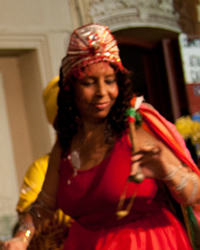

Mestizos are people of mixed European and indigenous Amerindian ancestry whose cultural identity bridges both worlds. After Spanish colonizers settled in Ecuador beginning in the sixteenth century, the indigenous population was devastated by disease and the harsh conditions of colonial rule. Spanish colonizers, usually unmarried men, often married indigenous women, and their children became known as mestizos. Though ethnically part European and part Amerindian, mestizos could be culturally either or both, making them difficult to define as a single group.
Mestizos make up most of Ecuador's population. Unlike purely indigenous peoples or white Ecuadorians, mestizos occupy a complex position in the nation's social structure. Historically, Spanish nobility designated mestizos as upper-class landowners during the colonial period, placing them above indigenous laborers but below European-descended elites. This historical arrangement continued until agrarian reforms in the 1960s redistributed land holdings. Today, mestizos inhabit cities and rural areas alike, representing Ecuador's cultural backbone and the lived experience of mestizaje—the blending of indigenous and Spanish traditions that defines modern Ecuadorian identity.
Mestizos speak Spanish as their primary language and live diverse lives depending on urban or rural location and social class. Rural mestizos engage in farming and livestock, while urban mestizos work in commerce, education, and professional services with greater economic opportunities.
Ecuadorian mestizo cuisine blends indigenous ingredients with Spanish techniques, featuring patacones (fried plantains), llapingachos (potato pancakes), hornado (roasted pork), and fanesca (traditional Easter soup). Coastal families prepare seafood dishes like ceviche, while highland families prefer rice, meat, and hominy. Family meals remain central to mestizo life, strengthening generational bonds.
Mestizo families center on nuclear units, though extended family relationships matter. Fathers traditionally held authority, though this is evolving as women pursue education and work. Mothers manage households and child-rearing. At fifteen, girls celebrate the quince años, a coming-of-age party marking the transition to womanhood.
Mestizos celebrate Christmas, Easter, All Saints' Day, and Carnival with religious observances and family gatherings. Day of the Dead in November honors deceased loved ones. The Festival of San Juan Bautista on June 24 blends Catholic and indigenous traditions through music and feasting. Corpus Christi celebrates with folkloric dancing and special sweets. The Fiesta de las Flores y las Frutas showcases mestizo and indigenous cultures. Soccer holds cultural significance beyond sport, uniting families and communities.
Mestizos are predominantly Roman Catholic, reflecting five centuries of Spanish colonial influence. Their religious practice fuses Catholic Christianity with indigenous spiritual beliefs. Mountains hold sacred significance in mestizo spirituality, with Catholic shrines throughout the highlands. The concept of Pachamama (Mother Earth) remains spiritually relevant, particularly in rural areas. Indigenous healers continue serving mestizo communities, integrating medicinal plant knowledge with spiritual practices.
The Charismatic movement has influenced mestizo congregations, introducing new worship forms alongside traditional Catholic practice. Evangelical Christianity is growing among some mestizo communities, with believers maintaining cultural connections to their heritage. Mestizos navigate a complex religious landscape where traditional Catholicism, indigenous spirituality, and emerging evangelical movements coexist.
Mestizos face significant physical and spiritual needs. Many lack access to quality education, adequate healthcare, and stable employment. Rural mestizos struggle with limited agricultural infrastructure and market access. Urban poverty remains prevalent with inadequate housing and sanitation. Domestic abuse affects many families, creating trauma and instability.
Spiritually, mestizos need transformation through Jesus Christ and understanding of the gospel's redemptive power. Many hold nominal Christian beliefs but lack personal conversion experience. They need fresh Holy Spirit work in churches and families, along with biblical teaching that honors their cultural context. As a culturally significant population, mestizo believers can influence other less-reached ethnic groups, yet many remain disconnected from vital gospel witness.
Pray for spiritual hunger among mestizo communities, asking God to awaken them to their spiritual need and create receptivity to the gospel message. May the Holy Spirit draw mestizos into genuine faith in Christ beyond cultural Christianity.
Pray for healing of mestizo families, particularly concerning domestic abuse and broken relationships. Ask God to strengthen marriages, protect children, and bring restoration and forgiveness through the gospel.
Pray for economic justice and development in mestizo communities, especially rural areas. Ask God to provide education, skill development, and sustainable livelihoods that demonstrate Christ's compassion and kingdom values.
Pray that mestizo believers become gospel workers among less-reached ethnic groups in Ecuador and Latin America. May God equip those who have experienced Christ's transformation to share their faith with indigenous peoples and other unreached communities, using their cultural bridges effectively.
Scripture Prayers for the Uruguayan, Mestizo in Uruguay.
https://www.sciencedirect.com/science/article/pii/S2666247721000312
https://www.everyculture.com/Cr-Ga/Ecuador.html
https://www.goaupair.com/cultural-exchange/ecuadorian-culture/
https://wanderbusecuador.com/ecuador-traditions/
https://wanderbusecuador.com/ecuador-traditions/
https://www.voyagers.travel/ecuador/traditions-festivities
https://www.turismoecuador24.com/blog/cultural-mestizaje-Ecuador-diversity-traditions-history
https://www.britannica.com/place/Ecuador/Daily-life-and-social-customs
https://www.anywhere.com/ecuador/travel-guide/people-and-culture
https://www.donquijote.org/ecuatorian-culture/
https://en.wikipedia.org/wiki/Culture_of_Ecuador
| Profile Source: Joshua Project |


